
 By
By The Five Minutes After Every Patient Leaves the Room
There’s a moment every clinician knows well. The patient has just left, the door is barely closed, and now comes the part nobody talks about in medical school: writing it all down. Not just jotting a note, but turning a fifteen-minute conversation into something that reads like a proper letter – clear, complete, and ready to send to a specialist, an insurer, or the patient’s file.
Multiply that moment by every appointment in a day, and it becomes obvious why documentation is one of the most exhausting parts of practicing medicine. It’s not the medicine that wears doctors down by 7 p.m. It’s the backlog of letters still waiting to be written.
Why Documentation Became the Hardest Part of the Job
Go back twenty years, and a doctor’s notes could be a few lines in a paper chart. Today, expectations are different. Referral letters need proper structure. Findings need to be documented thoroughly enough to hold up months later if a patient’s case is reviewed. Insurers want specifics, not summaries. All of that adds real time to a job that was already full.
Most practices have tried to solve this the same way for decades: dictate into a recorder and wait for a transcription service, or just sit down and type everything manually after hours. Both approaches work, technically. Neither one is fast, and neither one gives a doctor their evening back.
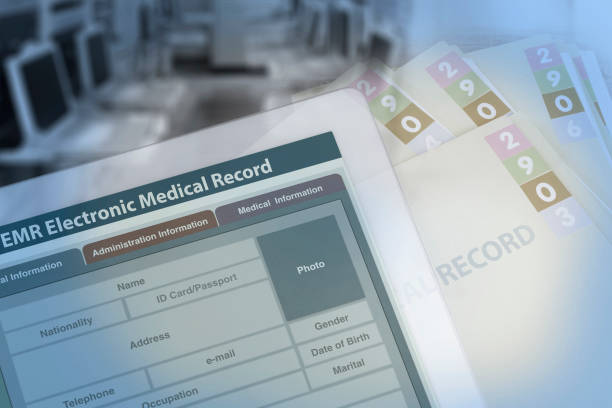
It’s a similar story for medizinische aufzeichnungen more broadly. Findings, exam notes, ongoing case documentation – all of it can be captured the moment it happens rather than reconstructed from memory an hour later, which tends to produce more accurate records in the first place.
Turning Conversation Into Structure, Automatically
This is the gap that tools like Scribamed are built to close. Instead of treating documentation as a separate task to be done later, it becomes part of the conversation itself. A doctor can record the consultation as it happens, dictate a summary right after, or even just speak a few bullet points covering the key details. From there, the system does the heavy lifting – organizing that raw information into a properly formatted medical letter.
This matters most for anyone who needs to arztbrief mit ki schreiben regularly – pulling together referral letters, discharge notes, and specialist correspondence without starting from a blank page every single time. What used to take fifteen or twenty minutes of careful typing becomes a quick read-and-approve step. The doctor still has the final word on every letter, but the drafting itself no longer eats into the day.
The Confidentiality Question Doesn’t Go Away
Bringing AI into anything involving patient information raises an obvious concern, and it’s a fair one. Medical confidentiality isn’t negotiable, and any tool handling consultation data needs to take that seriously from the ground up, not as an afterthought.
The way Scribamed is built addresses this directly: everything is processed end-to-end encrypted within the browser itself. That’s a genuine architectural choice, not a line in a privacy policy. It means the audio, the dictation, and the notes never sit unprotected on some external server waiting to be processed – the encryption travels with the data the entire way through. That gives practices a real technical safeguard for medical confidentiality, sitting alongside whatever policies and training already exist in the clinic.
For doctors who’ve stayed cautious about AI tools specifically because of how patient data gets handled, this is the kind of detail that actually changes the calculation.
What Changes Day to Day
The practical shift is smaller than people expect, which is part of the appeal. Nothing about how a doctor talks to a patient needs to change. The consultation happens the same way it always has. What’s different is everything that used to happen afterward – the retyping, the reformatting, the mental effort of remembering exactly how a referral letter is supposed to be worded.
Smaller practices tend to notice the difference fastest. A solo physician or a small clinic without a dedicated administrative team feels every minute of documentation directly, because there’s no one else to hand it off to. When that time shrinks, it doesn’t just vanish – it goes back into seeing patients properly, finishing on time, or simply not bringing letters home to write at the kitchen table.
Medicine has changed enormously over the last few decades, but the paperwork behind it stayed stuck in an older era for far too long. What’s shifting now isn’t the clinical work itself – it’s the layer around it, the part where a conversation becomes a record. Done well, that shift barely feels like a new tool at all. It just feels like getting a little bit of the day back.
FAQs
Q1. What is Arztbrief mit KI Schreiben?
Arztbrief mit KI Schreiben refers to using artificial intelligence to support the preparation of structured medical letters, helping organize relevant clinical information efficiently.
Q2. How can AI assist with medical documentation?
AI can help structure information, organize clinical notes, reduce repetitive administrative tasks, and support consistent documentation workflows for healthcare professionals.
Q3. Why are medizinische Aufzeichnungen important?
Medizinische Aufzeichnungen provide an organized record of relevant patient information, clinical findings, treatments, and other details needed for effective healthcare coordination.
Q4. Can AI make medical letter preparation more efficient?
AI-assisted tools can help streamline drafting processes, structure information, and reduce manual work, while healthcare professionals remain responsible for reviewing the final content.
Q5. What should be considered when using AI for medical records?
AI-supported documentation should prioritize accuracy, privacy, security, appropriate review, and compliance with applicable healthcare documentation requirements.


